Kevin’s Book List
Keep Reading, Watching, Learning, Questioning
On Finance
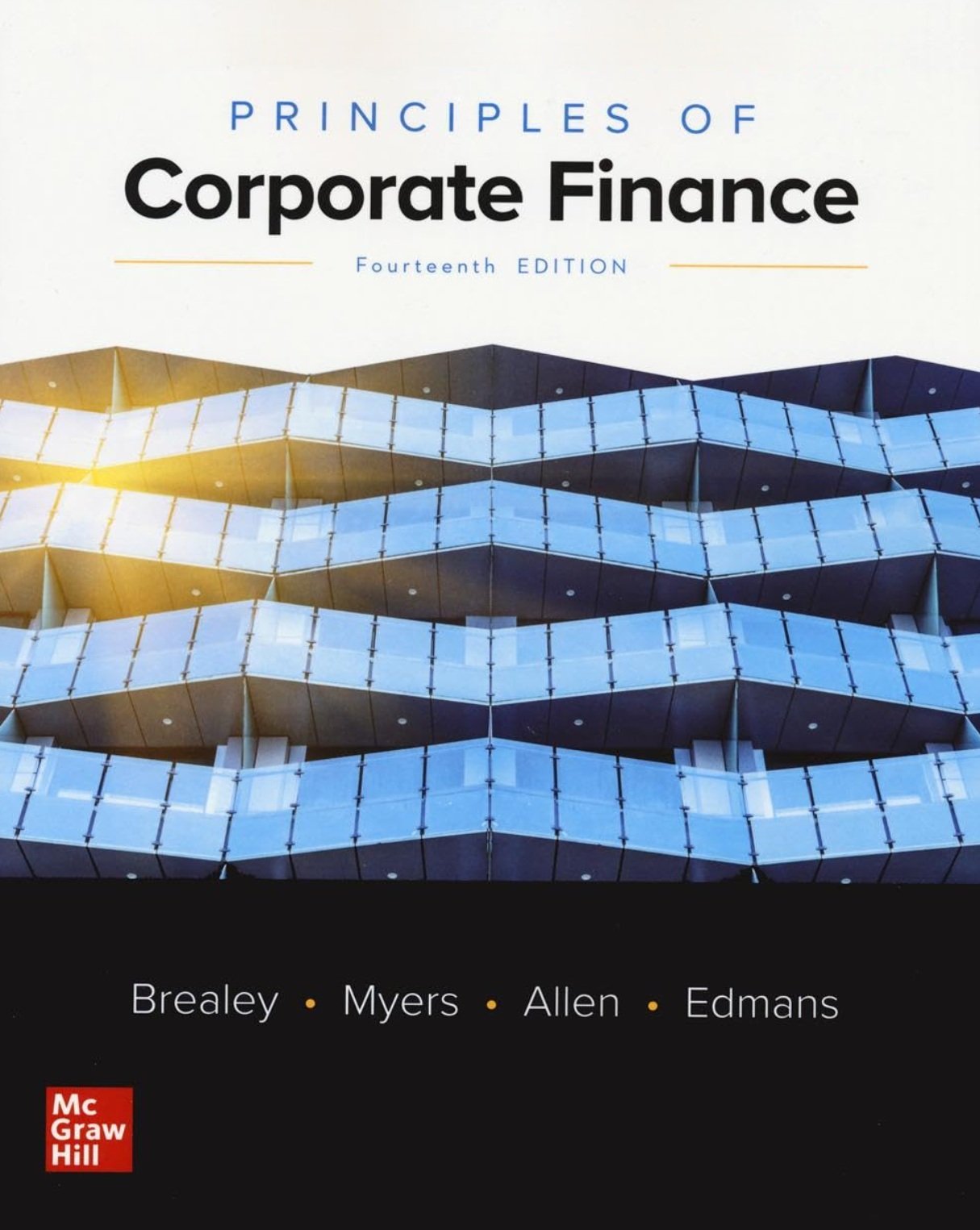
"The first point to remember is that NPV depends on future cash flows. Cash flow is a simple concept. It is just the difference between dollars received and dollars paid out. Many people nevertheless confuse cash flow with accounting profits. Accountants start with cash flow, but then they add and subtract various items to produce 'profit.' They do this to provide a better measure of the performance of the firm as a going concern. But for the financial manager, the task is to find the value of the project. And that value depends on the net cash flow."
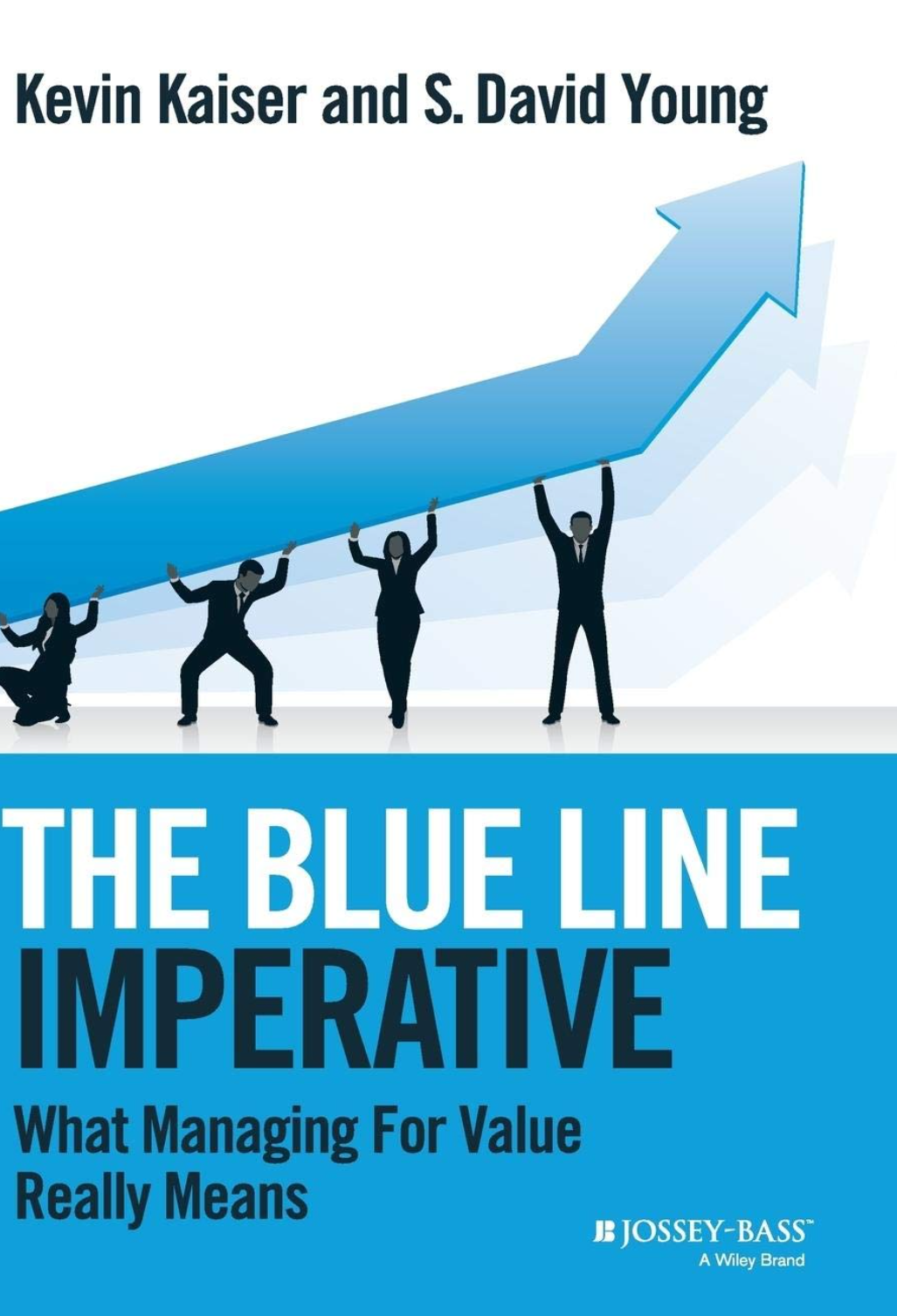
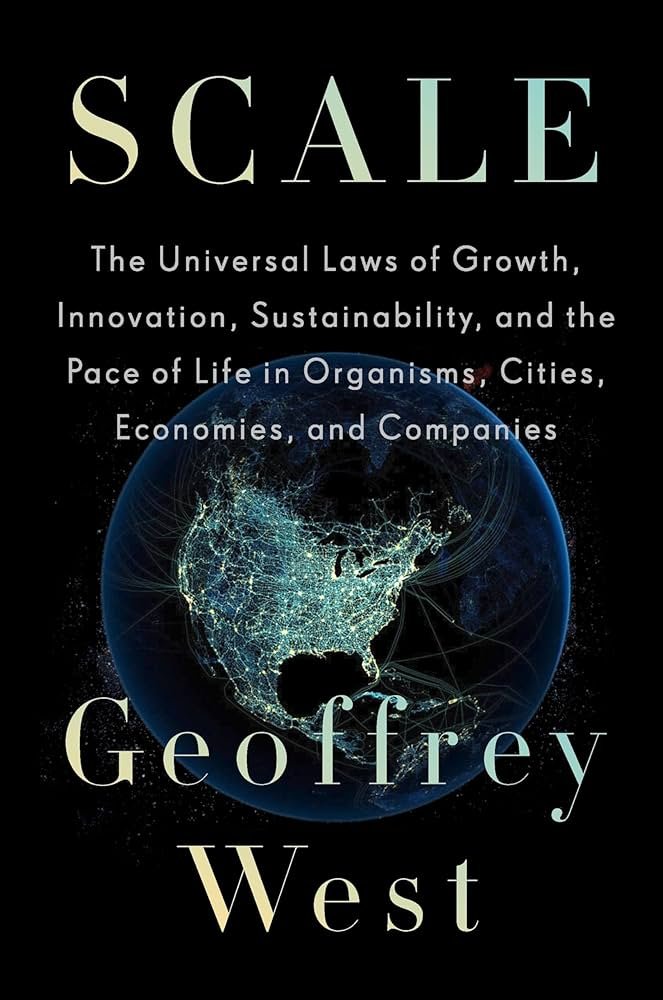
"Every living system knows, deep in its cells, that energy is scarce and must earn its keep relative to every other possible use. When a company—or a body—allocates resources below this natural hurdle, trust evaporates, engagement dies, and the system begins its quiet slide toward extinction. Fairness isn't sentiment; it's survival math. Violate the blue line, and nature votes you off the island."
"The Valuation Principle states that the value of an asset is the present value of the expected future cash flows. It is important to realize that the market price of a security may not always be equal to this value. While in a sophisticated market we expect the price to be a good estimate, the price is ultimately a reflection of what someone is willing to pay right now. For the financial manager, the focus must remain on the Net Present Value (NPV) of the project’s cash flows. If the NPV is positive, the decision increases the wealth of the firm and its shareholders, regardless of whether the market price adjusts immediately. Finance is the study of how to value those future cash flows, and management is the process of making decisions that maximize that value."
On Leadership
"In Becoming a Top Manager, Kaiser, Pich and Schecter skilfully and cleverly address the three vital pieces of this transformation: managing the business, managing others, and, most important of all, managing oneself. You will not read a book that addresses the transition to general management in a more astute and engaging way." —Ricardo Ferrero, Global Marketing Lead, Baker Hughes
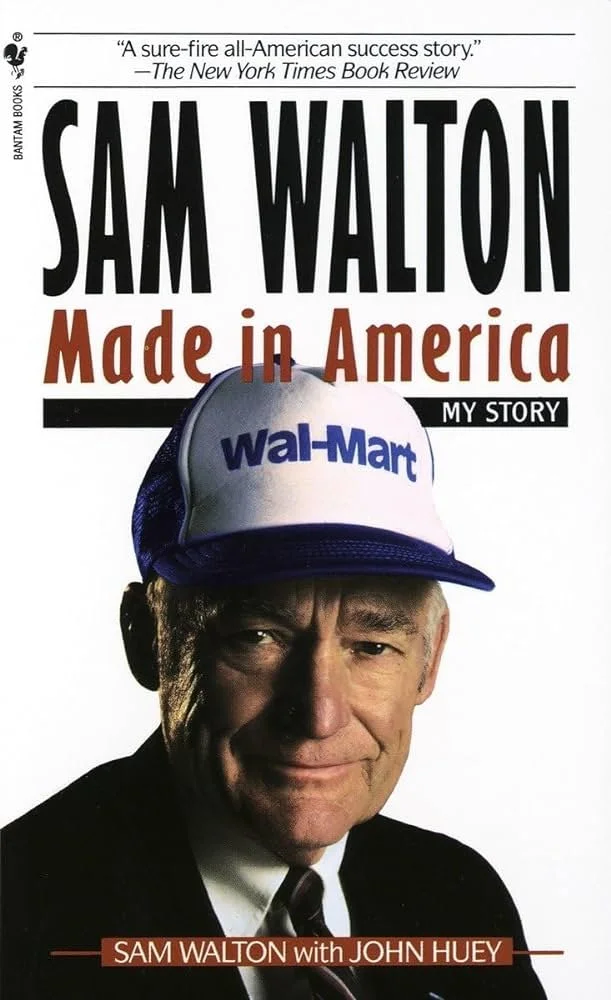
The book is a classic rags-to-riches tale emphasizing grit, risk-taking, believing in your vision even when others doubt it, and long-term compounding. As Sam Walton tells the story of Walmart, it is clear that success didn't come overnight—Walmart was a slow build over decades, starting small and scaling through discipline, trusting in people, and a focus on customers, and an appreciation for the critical role of each and every employee.
“All we are doing is looking at the time line from the moment the customer gives us an order to the point when we collect the cash. And we are reducing that time line by removing the non-value-added wastes. (Ohno, 1988)”
"Every living system knows, deep in its cells, that energy is scarce and must earn its keep relative to every other possible use. When a company—or a body—allocates resources below this natural hurdle, trust evaporates, engagement dies, and the system begins its quiet slide toward extinction. Fairness isn't sentiment; it's survival math. Violate the blue line, and nature votes you off the island."
Early on I discovered, to my dismay, that the open exchange of ideas - in a sense, the free-for-all of problem solving in the absence of hierarchy that I had learned at McKinsey - doesn't work so easily in a large, hierarchical-based organization.
Thus began a lifelong process of trying to build organizations that allow for hierarchy but at the same time bring people together for problem solving, regardless of where they are positioned within the organization.
Some things benefit from shocks; they thrive and grow when exposed to volatility, randomness, disorder, and stressors and love adventure, risk, and uncertainty. Yet, in spite of the ubiquity of the phenomenon, there is no word for the exact opposite of fragile. Let us call it antifragile.
On economics
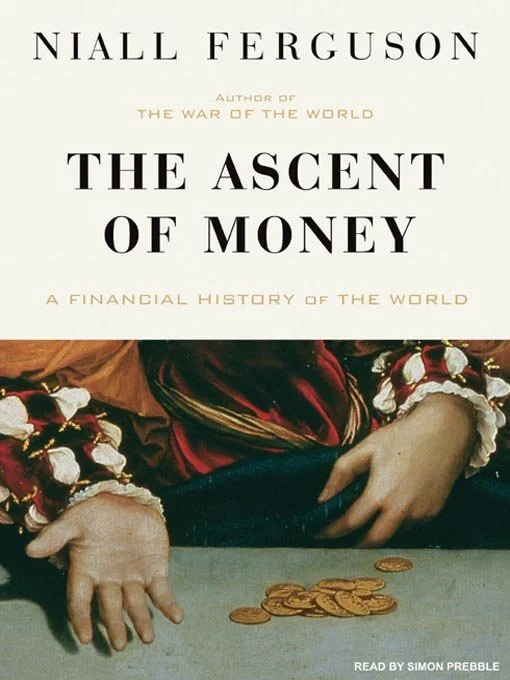
"The ascent of money has been essential to the ascent of man. Far from being the work of mere leeches intent on sucking the life's blood out of indebted families or gambling with the savings of widows and orphans, financial innovation has been an indispensable factor in man's advance from wretched subsistence to the giddy heights of material prosperity."
“There is always a price to pay when energy is processed; there is no free lunch. Because energy underlies the transformation and operation of literally everything, no system operates without consequences. Indeed, there is a fundamental law of nature that cannot be transgressed, called the Second Law of Thermodynamics, which says that whenever energy is transformed into a useful form, it also produces “useless” energy as a degraded by-product: “unintended consequences” in the form of inaccessible disorganized heat or unusable products are inevitable. There”
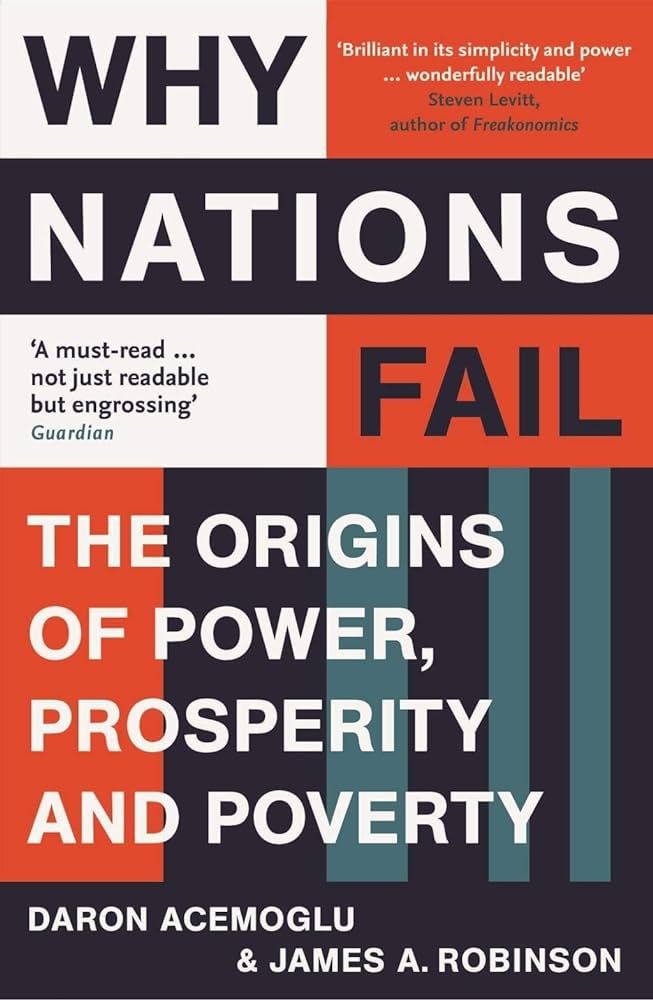
“Economic institutions shape economic incentives: the incentives to become educated, to save and invest, to innovate and adopt new technologies, and so on. It is the political process that determines what economic institutions people live under, and it is the political institutions that determine how this process works.
NATIONS FAIL TODAY because their extractive economic institutions do not create the incentives needed for people to save, invest, and innovate. Extractive political institutions support these economic institutions by cementing the power of those who benefit from the extraction.”
On Decision Making
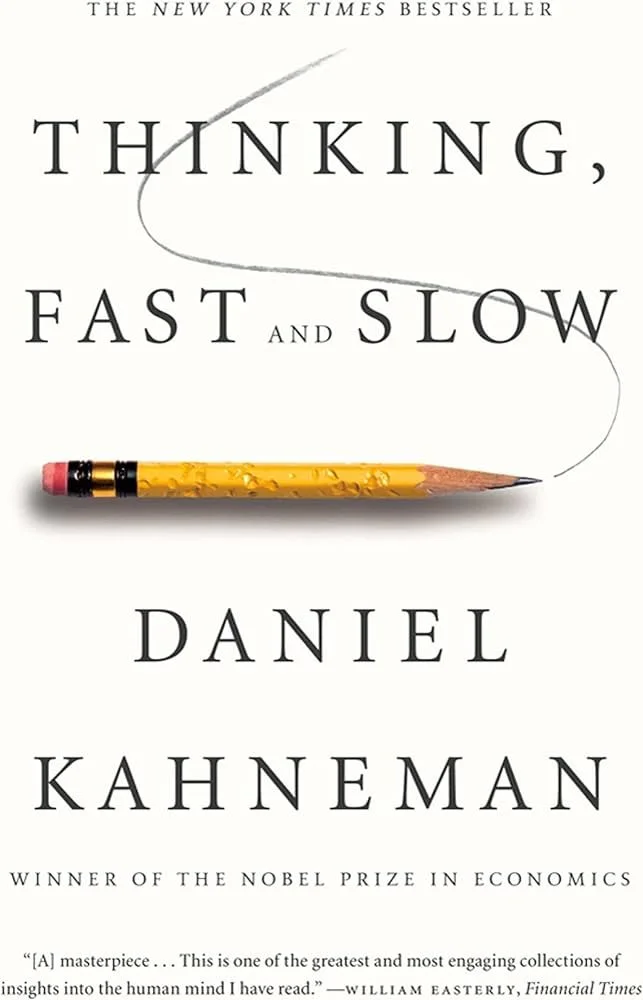
"Everything makes sense in hindsight, a fact that financial pundits exploit every evening as they offer convincing accounts of the day’s events. We cannot suppress the powerful intuition that what makes sense in hindsight today was actually predictable yesterday. The illusion that we understand the past fosters overconfidence in our ability to predict the future. Our tendency to construct and believe coherent narratives of the past makes it difficult for us to accept the limits of our forecasting ability and the role of luck in outcomes. We are prone to blame decision-makers for good decisions that worked out badly and to give them too little credit for successful moves that appeared obvious only after the fact. This is the essence of outcome bias."
Reason, we argue, has two main functions: that of producing reasons for justifying oneself, and that of producing arguments to convince others. These two rely on the same kinds of reasons and are closely related.
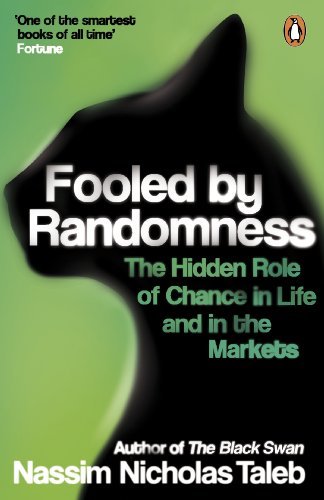
This book is about luck disguised and perceived as nonluck (that is, skills) and, more generally, randomness disguised and perceived as non-randomness (that is, determinism). It manifests itself in the shape of the lucky fool, defined as a person who benefited from a disproportionate share of luck but attributes his success to some other, generally very precise, reason. Such confusion crops up in the most unexpected areas, even science, though not in such an accentuated and obvious manner as it does in the world of business.
On valuation
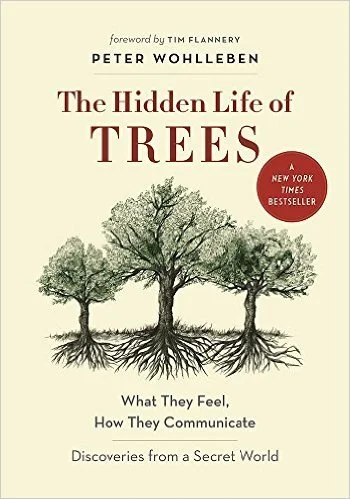
“A tree is not a forest. On its own, a tree cannot establish a consistent local climate. It is at the mercy of wind and weather. But together, many trees create an ecosystem that moderates extremes of heat and cold, stores a great deal of water, and generates a great deal of humidity. And in this protected environment, trees can live to be very old. To get to this point, the community must remain intact no matter what.”
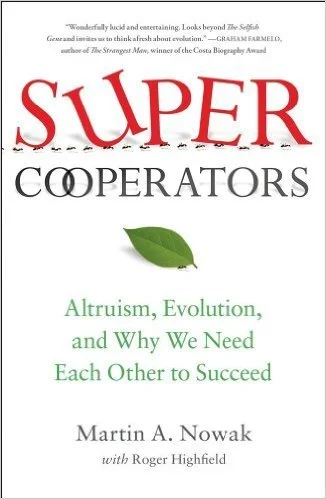
“Punishment can be useful in the short term, but in the long run it is better to reward cooperation than to punish defection. Rewards encourage people to cooperate more, while punishment can lead to resentment and retaliation.”
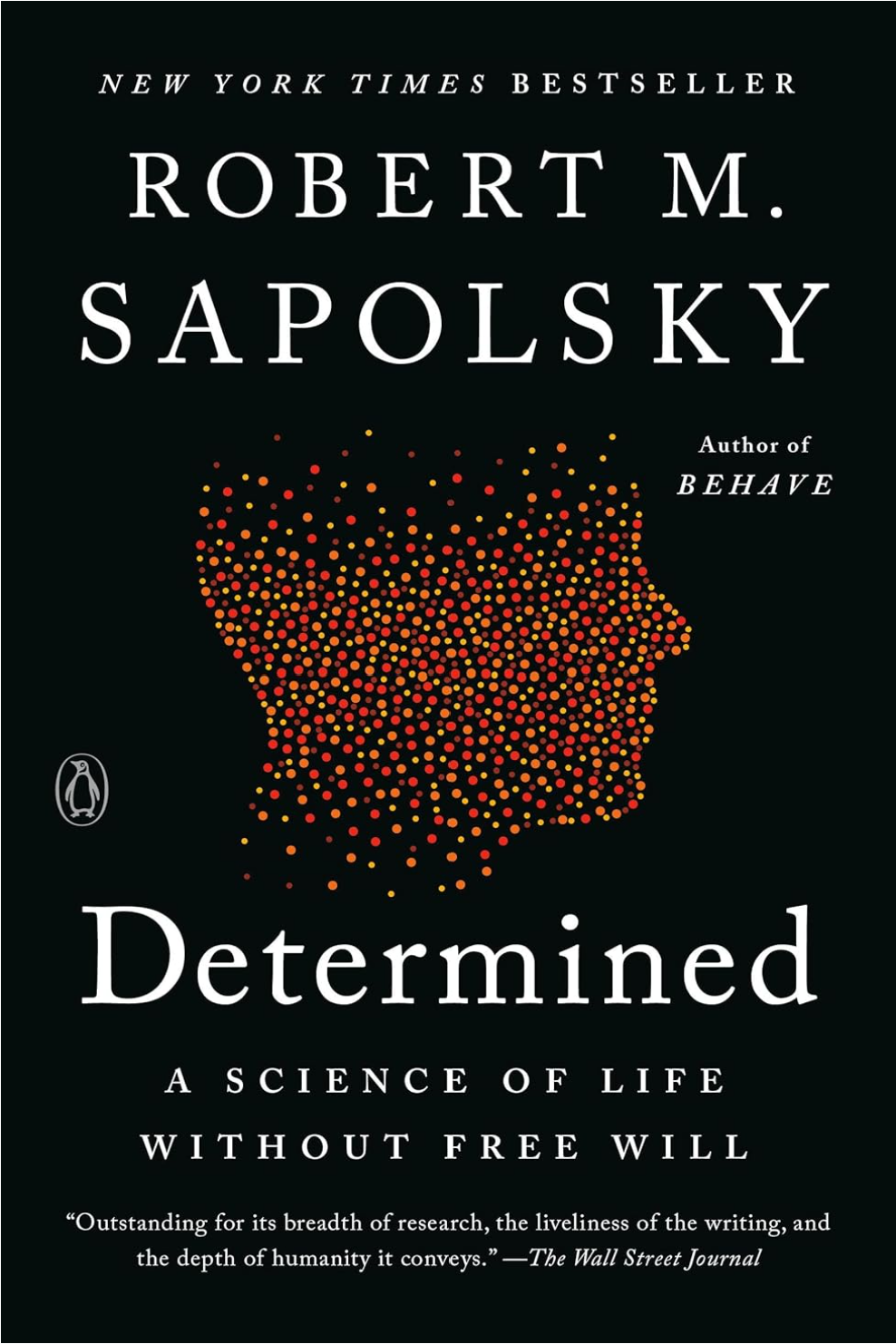
"We are the sum of what is happenstance—biological and environmental—over which we had no control. Every moment in our lives is the result of the biology that came just before it, and the environment that shaped that biology. There is no 'extra' bit of us that sits outside the laws of physics and biology to make a 'free' choice. Recognizing this doesn't mean life has no meaning; it means we can finally stop judging people—and ourselves—for things that were ultimately determined by forces we didn't choose."
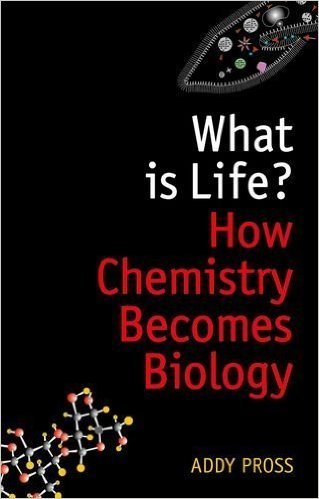
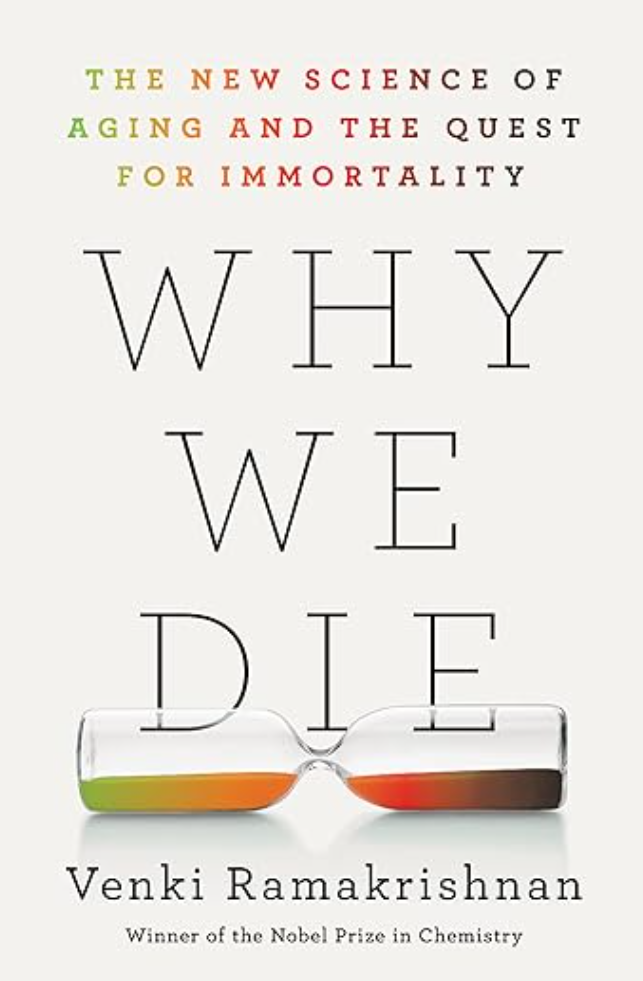
When we think of death, we are generally thinking about our own: the end of our conscious existence as an individual. There is a stark paradox about that kind of death: although individuals die, life itself continues. I don’t mean just in the sense that our family, community, and society will all go on without us. Rather, it is remarkable that every creature alive today is a direct descendant of an ancestral cell that existed billions of years ago. So, although changing and evolving with time, some essence in all of us has lived continuously for a few billion years. That will continue to be true for every living thing for as long as life survives on Earth, unless we one day create an entirely artificial form of life.
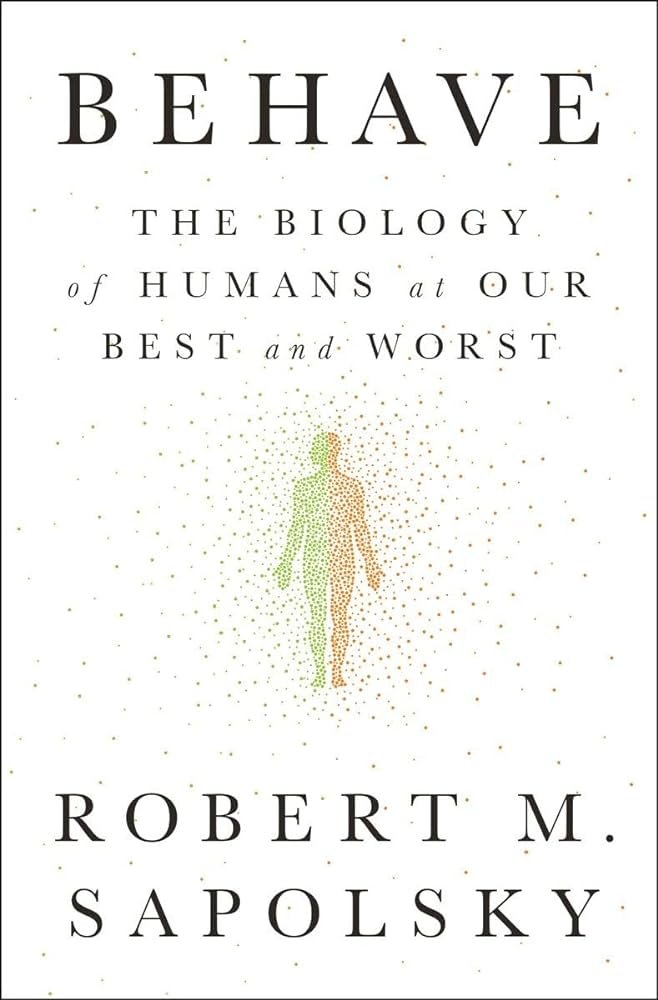
First, you can’t begin to understand things like aggression, competition, cooperation, and empathy without biology; I say this for the benefit of a certain breed of social scientist who finds biology to be irrelevant and a bit ideologically suspect when thinking about human social behavior. But just as important, second, you’re just as much up the creek if you rely only on biology; this is said for the benefit of a style of molecular fundamentalist who believes that the social sciences are destined to be consumed by “real” science. And as a third point, by the time you finish this book, you’ll see that it actually makes no sense to distinguish between aspects of a behavior that are “biological” and those that would be described as, say, “psychological” or “cultural.” Utterly intertwined.
On Shithappensianism
"We are the sum of what is happenstance—biological and environmental—over which we had no control. Every moment in our lives is the result of the biology that came just before it, and the environment that shaped that biology. There is no 'extra' bit of us that sits outside the laws of physics and biology to make a 'free' choice. Recognizing this doesn't mean life has no meaning; it means we can finally stop judging people—and ourselves—for things that were ultimately determined by forces we didn't choose."
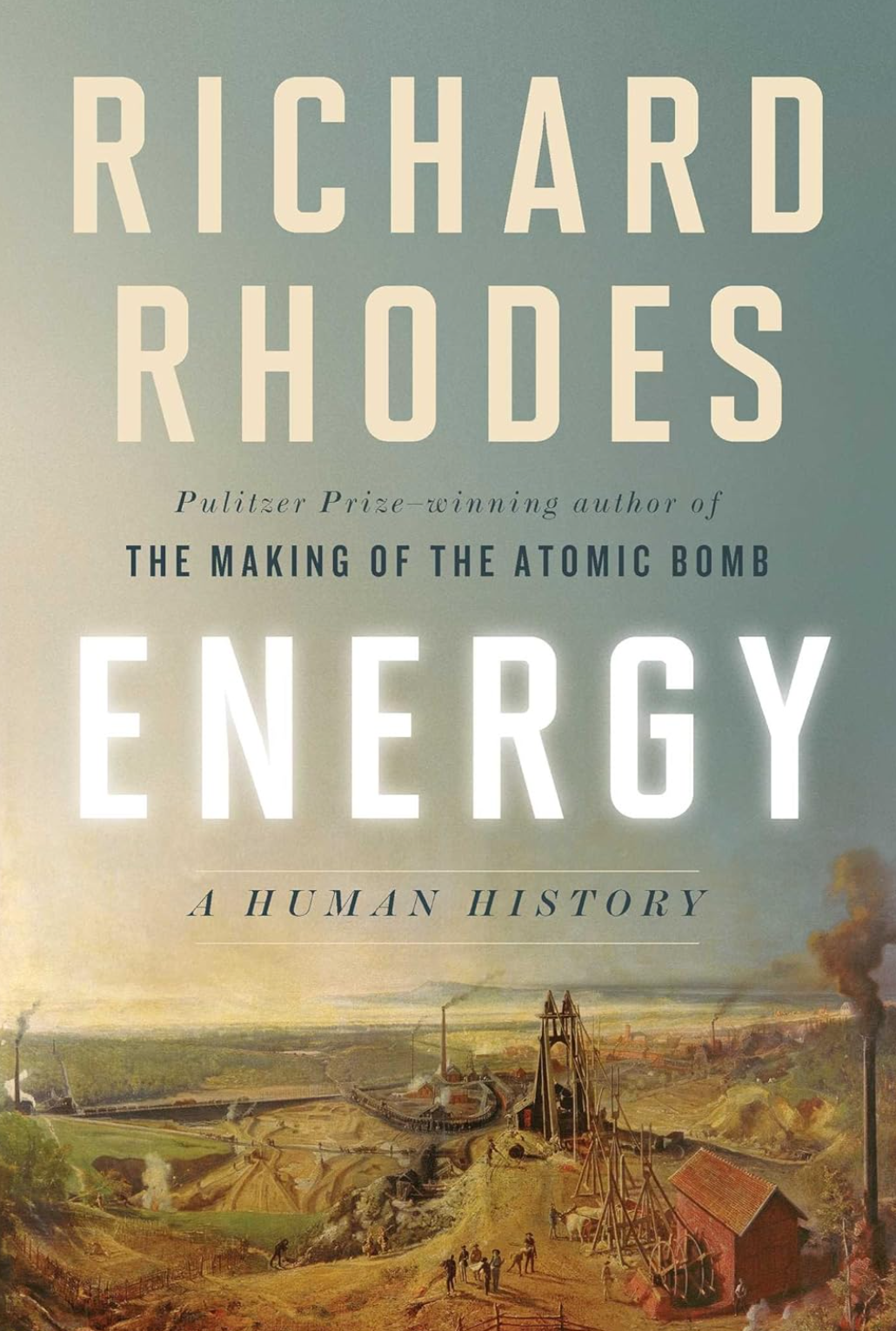
This book takes us on a journey through human ingenuity and development as we transitioned from one fuel source to another in our need for energy to support daily life. New energy sources do not instantly replace old ones. They coexist for long periods, often for 50–100 years, as infrastructure, habits, capital investment, and political systems adapt. Rhodes shows this pattern repeating with coal overtaking wood, oil overtaking coal, and now renewables gradually displacing fossil fuels.
Look for people who have lots of great questions. Smart people are the ones who ask the most thoughtful questions, as opposed to thinking they have all the answers. Great questions are a much better indicator of future success than great answers.
This book is about luck disguised and perceived as nonluck (that is, skills) and, more generally, randomness disguised and perceived as non-randomness (that is, determinism). It manifests itself in the shape of the lucky fool, defined as a person who benefited from a disproportionate share of luck but attributes his success to some other, generally very precise, reason. Such confusion crops up in the most unexpected areas, even science, though not in such an accentuated and obvious manner as it does in the world of business.
Some things benefit from shocks; they thrive and grow when exposed to volatility, randomness, disorder, and stressors and love adventure, risk, and uncertainty. Yet, in spite of the ubiquity of the phenomenon, there is no word for the exact opposite of fragile. Let us call it antifragile.
On Investing
"The core of the problem is that we live in a world that is obsessed with outcomes but indifferent to the process that produced them. If we want to improve our judgment, we must focus on the process. We must recognize that a single forecast is just a data point in a long series. To be a superforecaster, you must be 'well-calibrated.' You must ensure that when you say there is a 70% chance of something happening, it actually happens 70% of the time. This requires a 'probabilistic' habit of mind—the willingness to see the world not as a series of certainties, but as a series of probabilities."
This book, “Valuation: Measuring and Managing the Value of Companies,” has been the foremost resource for measuring company value for nearly three decades. Now in its seventh edition, this acclaimed volume continues to help financial professionals around the world gain a deep understanding of valuation and help their companies create, manage, and maximize economic value for their shareholders.
Clear, accessible chapters cover the fundamental principles of value creation, analyzing and forecasting performance, capital structure and dividends, valuing high-growth companies, and much more. The Financial Times calls the book “one of the practitioners’ best guides to valuation.”
Managers and investors place big bets and take large risks based on the valuation models discussed in this book. They are willing to make those investments and take those risks because they expect to earn sufficient cash in the future from these investments to create value for their companies or superior returns for their investment portfolios. The valuation models discussedin this book provide the conceptual frameworks and tools to conduct these analyses.
On Governance
In almost nine years as a fund manager, I’ve become increasingly cynical about how public companies are run. In the wasteland of small capitalization companies where I often look for investment ideas, corporate governance can be downright abysmal. I’ve had large investments in several public companies that willfully screwed their shareholders, and I’ve watched many more such situations from the sidelines.
Every once in a while, an up-or-down-leg goes on for a long time and/or to a great extreme and people start to say "this time it's different." They cite the changes in geopolitics, institutions, technology or behaviour that have rendered the "old rules" obsolete. They make investment decisions that extrapolate the recent trend. And then it turns out that the old rules still apply and the cycle resumes. In the end, trees don't grow to the sky, and few things go to zero.
Look for people who have lots of great questions. Smart people are the ones who ask the most thoughtful questions, as opposed to thinking they have all the answers. Great questions are a much better indicator of future success than great answers.
On Humans in the World
“You could never convince a monkey to give you a banana by promising him limitless bananas after death in monkey heaven.”
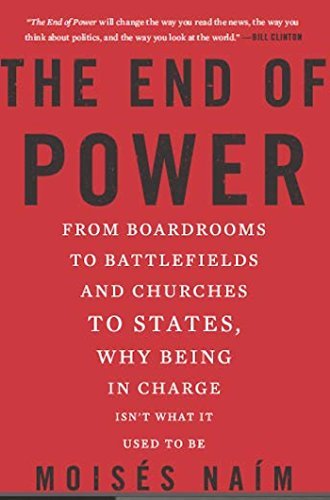
The fall of barriers to power is opening the door to new players of the kind that have transformed chess—and, as the chapters ahead will detail, are now transforming other major fields of human competition.
In almost nine years as a fund manager, I’ve become increasingly cynical about how public companies are run. In the wasteland of small capitalization companies where I often look for investment ideas, corporate governance can be downright abysmal. I’ve had large investments in several public companies that willfully screwed their shareholders, and I’ve watched many more such situations from the sidelines.
This book is about the uneven ebb and flow of history. It distinguishes the long epochs in which hierarchical structures dominated human life from the rarer but more dynamic eras when networks had the advantage, thanks in part to changes in technology. To put it simply: when hierarchy is the order of the day, you are only as powerful as your rung on the organizational ladder of a state, corporation or similar vertically ordered institution. When networks gain an advantage, you can be as powerful as your position in one or more horizontally structured social groups. As we shall see, this dichotomy between hierarchy and network is an over-simplification. Nevertheless, some personal disclosures may illustrate its usefulness as a starting point.
On Nature
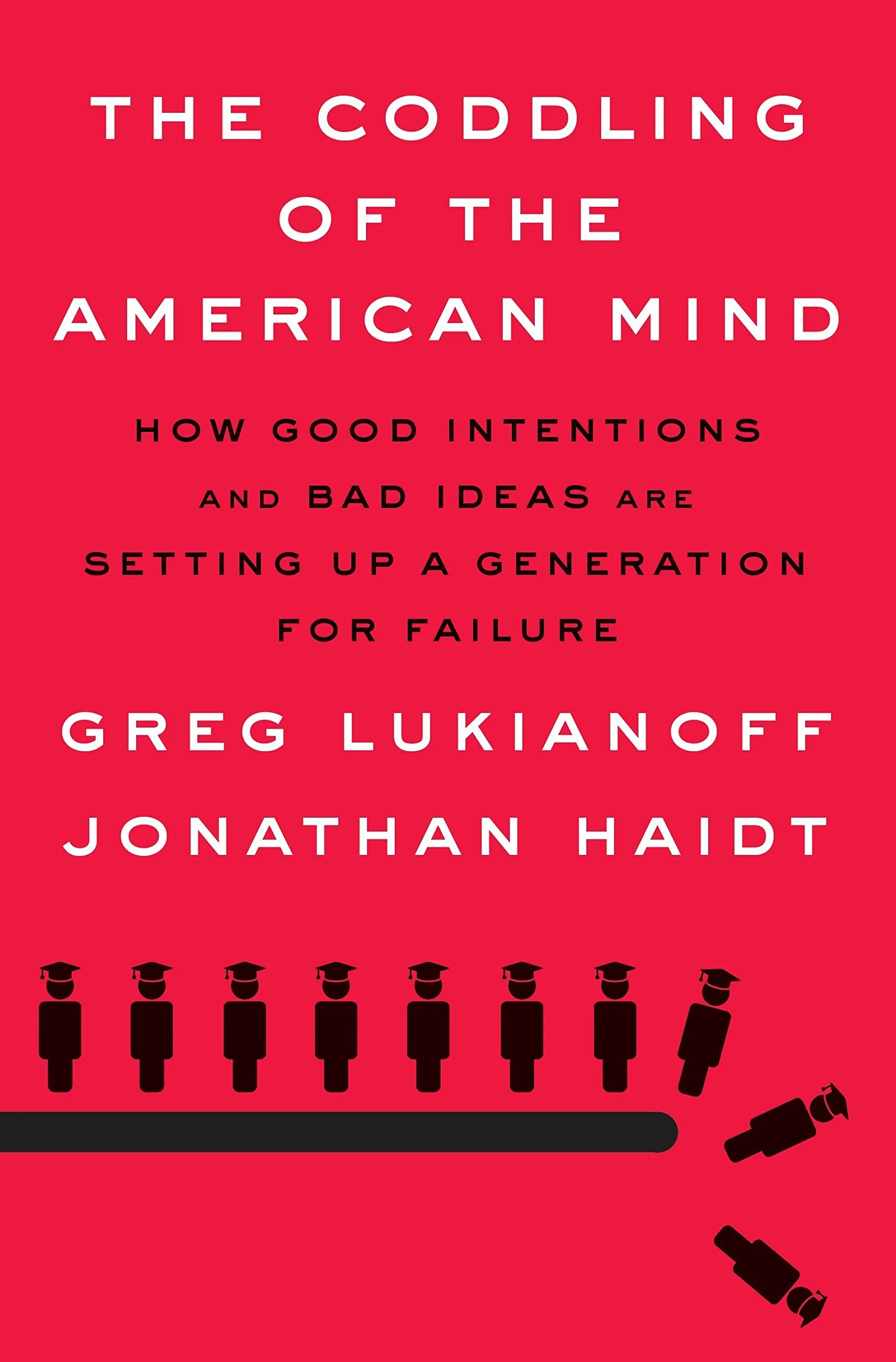
“A culture that allows the concept of ‘safety’ to creep so far that it equates emotional discomfort with physical danger is a culture that encourages people to systematically protect one another from the very experiences embedded in daily life that they need in order to become strong and healthy.”
"The ascent of money has been essential to the ascent of man. Far from being the work of mere leeches intent on sucking the life's blood out of indebted families or gambling with the savings of widows and orphans, financial innovation has been an indispensable factor in man's advance from wretched subsistence to the giddy heights of material prosperity."
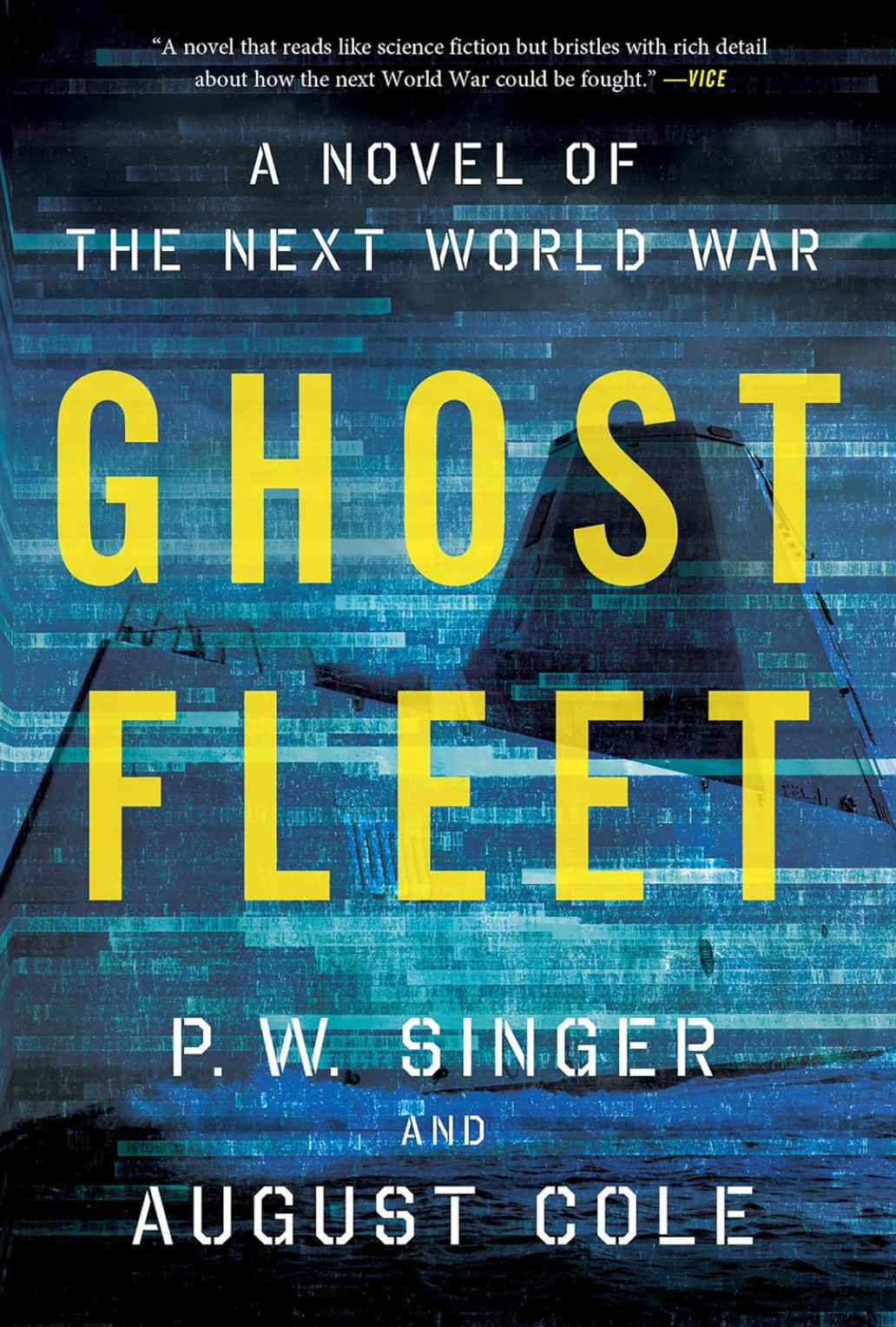
"The war had begun not with a bang but with a blackout. And in that darkness, America discovered just how dependent it had become on the very things that now betrayed it."
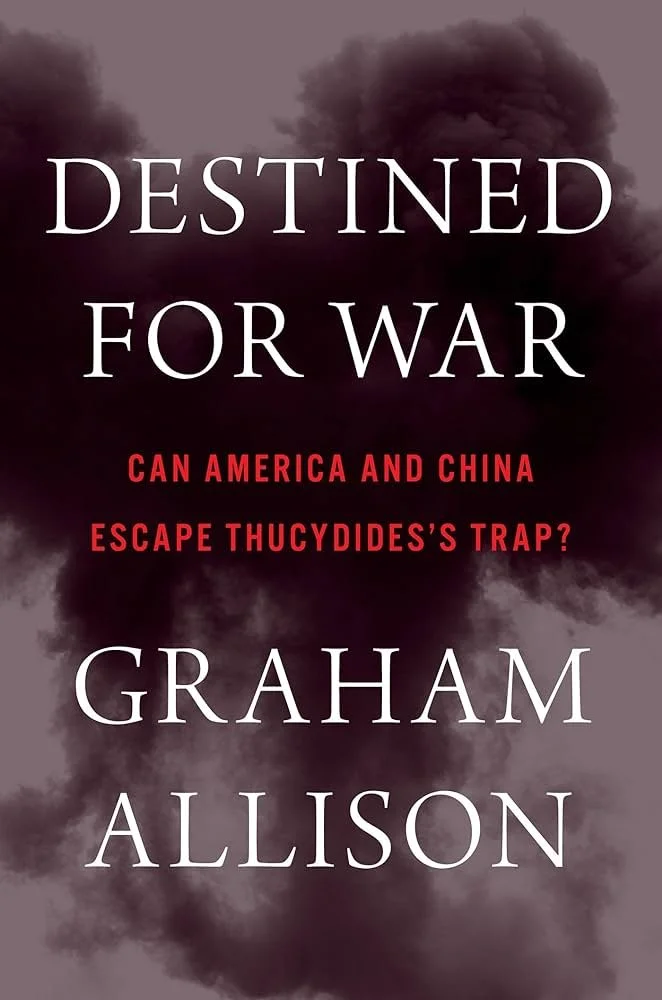
"When a rising power threatens to displace a ruling power, alarm bells should sound: danger ahead. China and the United States are currently on a collision course for war—unless both parties take difficult and painful actions to avert it."
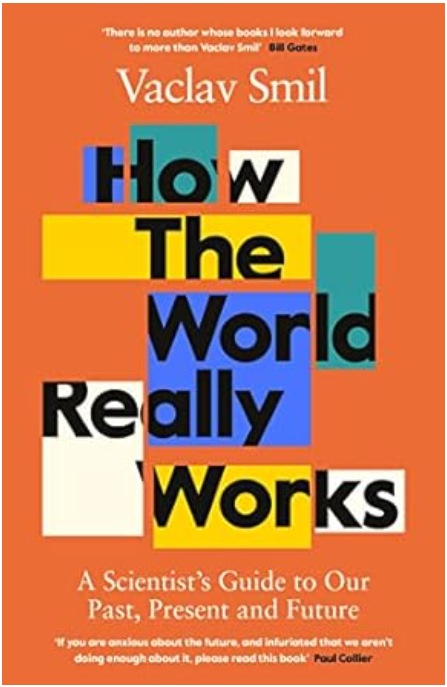
The book is relatively short (~300 pages), packed with stats and calculations, and written in clear (if occasionally blunt/sardonic) prose. It's an antidote to both climate denial and overly rosy green-transition narratives. It provides Vaclav’s grounded, quantitative thinking about energy, food, materials, and sustainability. Everyone needs to read this book.
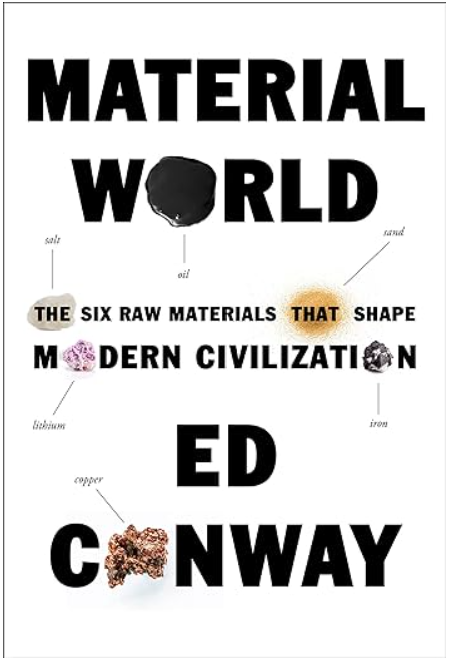
"We are living in a world that is more dependent on physical materials than at any point in human history. We have become incredibly good at making things, but we have become even better at ignoring the massive, violent effort required to harness the substances that make our modern life possible. We talk about the 'digital economy' as if it exists in the ether, but every bit of data, every financial transaction, and every silicon chip is rooted in the earth. If you want to understand the future, you have to understand the materials that will build it."
"Every living system knows, deep in its cells, that energy is scarce and must earn its keep relative to every other possible use. When a company—or a body—allocates resources below this natural hurdle, trust evaporates, engagement dies, and the system begins its quiet slide toward extinction. Fairness isn't sentiment; it's survival math. Violate the blue line, and nature votes you off the island."