
A Century of Plenty
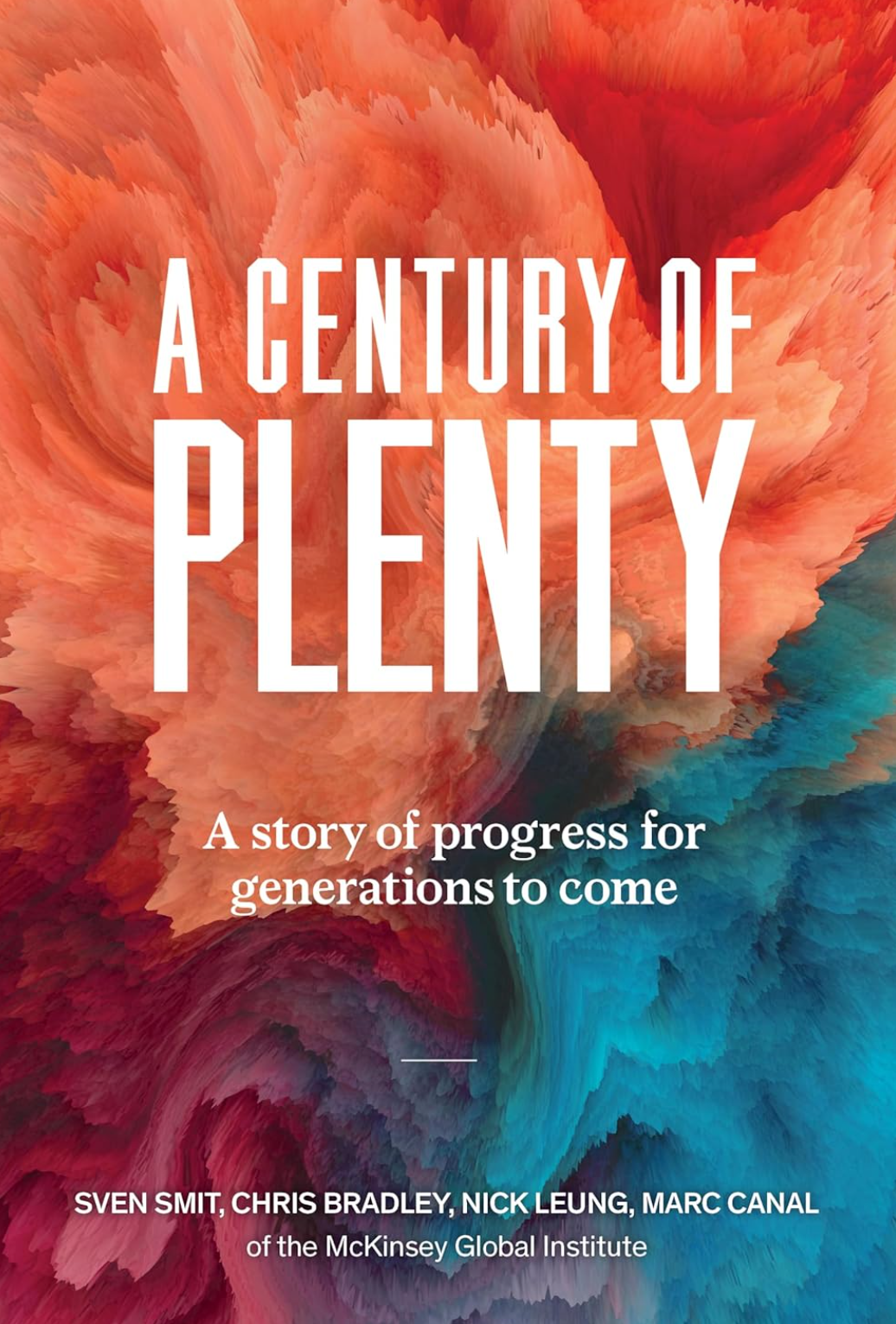
A Century of Plenty: A Story of Progress for Generations to Come
Sven Smit, Chris Bradley, Nick Leung, Marc Canal of the McKinsey Global Institute
What it’s about
This book is an ambitious, data-rich manifesto from the McKinsey Global Institute (MGI) that celebrates the unprecedented human progress of the past century while boldly asking: Can we replicate—or exceed—it over the next 100 years? Co-led by Sven Smit (former MGI chair and McKinsey senior partner), the book argues yes: By 2100, it's physically feasible for every person on Earth to enjoy at least today's Swiss living standards (~$82,000 GDP per capita, high health/education/quality-of-life metrics), even with a population up to 12 billion.
The authors analyze the "progress machine" that drove 20th-century gains (innovation, capital investment, globalization, demographic dividends, energy abundance) and stress-test a future of shared prosperity requiring ~8.5x global GDP growth. They conclude physical limits (energy, food, metals/minerals) aren't the barrier—there's enough if deployed efficiently—only "limits in hearts and minds" (pessimism, fear of growth, fragmentation) hold us back. The book counters doomer narratives with evidence-based optimism, urging renewed belief in growth as the engine of dignity, opportunity, and longer/better lives.
Why I like it
The tone is confident, evidence-driven, and contrarian—pushing back against scarcity mindsets with McKinsey-style modeling and optimism rooted in history. It's a corporate/think-tank take on Rosling's Factfulness: progress is real, repeatable, and essential. It fully aligns with, and reinforces, the principles of the Blue Line Imperative that there is no limit to the extent to which humans can utilize the resources of the earth more efficiently to deliver happiness to humanity more effectively. And in their efforts to do both, the well-being of humans will only improve.